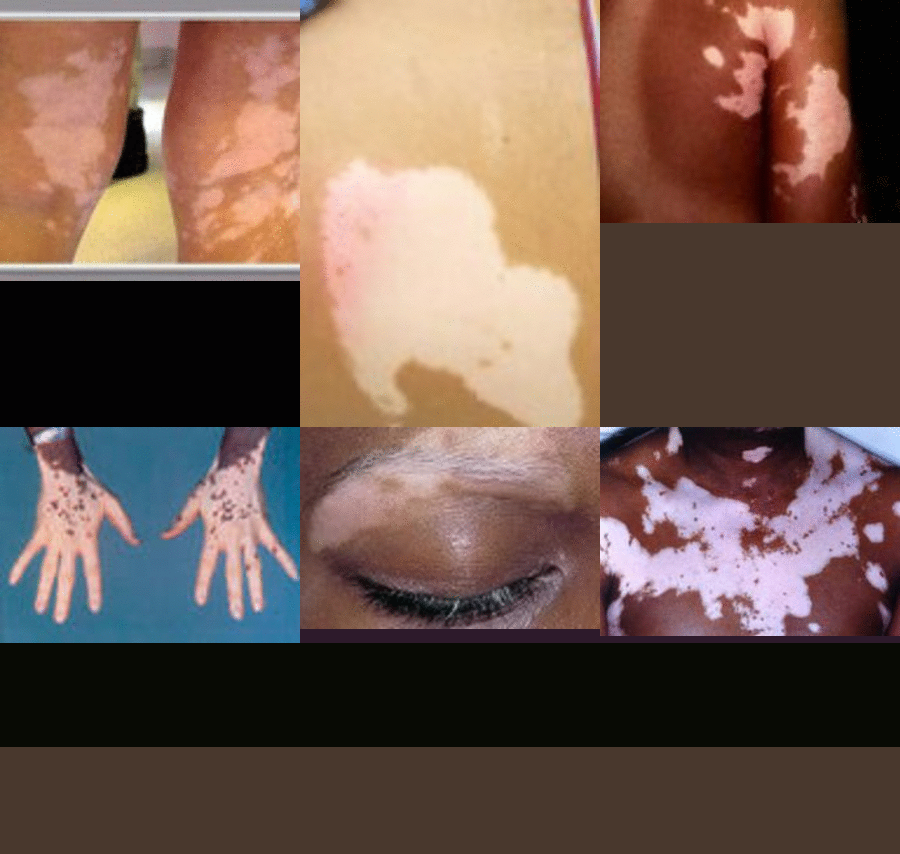
Vitiligo
a non-contagious skin disorder in which there is a patchy loss of skin color and depigmentation.
White patches of skin appear on different parts of the body. This happens because the cells that make pigment in the skin are destroyed. These cells are called melanocytes. Vitiligo affects all races, but is more noticeable in people with darker skin. Vitiligo usually starts as small areas of pigment loss that spread with time. At this present time, there is no cure for vitiligo. The goal for treatment is to stop or slow the progression of pigment loss and, if you desire, attempt to return some color to your skin. Depending on how much pigment is lost, and the desire to have an even skin tone, some individuals have chosen to take the necessary steps to depigmentation.
The cause of vitiligo is not known, but doctors and researchers have several different theories. One theory is that people develop antibodies that destroy the melanocytes in their own bodies. Another theory is that melanocytes destroy themselves. Finally, some people have reported that a single event such as sunburn or emotional distress triggered vitiligo; however, these events have not been scientifically proven to cause vitiligo.
Our skin color is determined not by how many melanocytes we have (we're all born with a similar amount), but rather by how active they are. Dark-skinned people have cells that naturally produce a lot of melanin, while light-skinned people produce much less.
Who Is Affected by Vitiligo?
About 1 to 2 percent of the world's population, or 40 to 50 million people, have vitiligo. In the United States, 2 to 5 million people have the disorder. Ninety-five percent of people who have vitiligo develop it before their 40th birthday. The disorder affects all races (more easily seen in people with a darker skin complexion) and both sexes equally.
What Are the Symptoms of Vitiligo?
People who develop vitiligo usually first notice white patches (depigmentation) on their skin. These patches are more common in sun-exposed areas, including the hands, feet, arms, face, and lips. Other common areas for white patches to appear are the armpits and groin and around the mouth, eyes, nostrils, navel, and genitals.
Vitiligo generally appears in one of three patterns. In one pattern (focal pattern), the depigmentation is limited to one or only a few areas. Some people develop depigmented patches on only one side of their bodies (segmental pattern). But for most people who have vitiligo, depigmentation occurs on different parts of the body (generalized pattern). In addition to white patches on the skin, people with vitiligo may have premature graying of the scalp hair, eyelashes, eyebrows, and beard. People with dark skin may notice a loss of color inside their mouths.
Vitiligo seems to be more common in people with certain autoimmune diseases (diseases in which a person's immune system reacts against the body's own organs or tissues). These autoimmune diseases include hyperthyroidism (an overactive thyroid gland), adrenocortical insufficiency (the adrenal gland does not produce enough of the hormone called corticosteroid), alopecia areata (patches of baldness), and pernicious anemia (a low level of red blood cells caused by failure of the body to absorb vitamin B-12). Scientists do not know the reason for the association between vitiligo and these autoimmune diseases. However, most people with vitiligo have no other autoimmune disease.
Vitiligo may also be hereditary, that is, it can run in families. Children whose parents have the disorder are more likely to develop vitiligo. However, most children will not get vitiligo even if a parent has it, and most people with vitiligo do not have a family history of the disorder.
Will the Depigmented Patches Spread?
There is no way to predict if vitiligo will spread. For some people, the depigmented patches do not spread. The disorder is usually progressive, however, and over time the white patches will spread to other areas of the body. For some people, vitiligo spreads slowly, over many years. For other people, spreading occurs rapidly. Some people have reported additional depigmentation following periods of physical or emotional stress.
Learning to Cope and Finding Support
The change in appearance caused by vitiligo can affect your emotional and psychological well-being. You may experience emotional stress, particularly if vitiligo develops on visible areas of your body, such as your face, hands, arms or feet. You may feel embarrassed, ashamed, depressed or worried about how others will react. Young people, who are often particularly concerned about their appearance, can be devastated by widespread vitiligo
Make a good connection. Find a doctor who's knowledgeable about vitiligo. A dermatologist is a doctor who specializes in the care of skin.
Learn all about it. Find out as much as you can about vitiligo and its treatment options so that you can participate in making important decisions about your health care.
Communicate your feelings. Let your doctor know if you're feeling depressed. He or she can refer you to mental health providers who specialize in helping people deal with depression.
Talk with others. Ask your doctor or search the web for support groups in your area for people who have vitiligo.
Confide in loved ones. Seek understanding and support from your family and friends.
For additional information and treatment options, please contact a dermatoligst. .
Source: Compiled From The World Wide Web